A pivotal admission amid ongoing uncertainty
The fate of Nigerien journalist Moussa Kaka has reached a decisive moment. After more than a month of silence following his departure from the premises of Radio Télévision Saraounia in Niamey, the authorities have finally acknowledged that he is “alive” and “held by the authorities.” This confirmation, delivered on 6 October by Niger’s Minister of Justice, marks a significant shift in a case that had been shrouded in mystery.
While this admission represents a breakthrough, it leaves critical questions unanswered. The government has not disclosed where Moussa Kaka is being detained, what specific charges he faces, or the legal basis for his detention. The lack of transparency has prompted calls for full accountability and an end to the uncertainty surrounding his situation.
The broader context of a troubling detention
Moussa Kaka is a seasoned journalist, formerly a correspondent for a major international broadcaster and currently the general manager of Radio Télévision Saraounia. His disappearance had already raised alarm among international press freedom organizations, human rights groups, and journalist federations, all of whom demanded urgent clarification. The confirmation of his detention, while a step forward, does little to address the underlying concerns about the motives behind his arrest.
Information that challenges the official narrative
A central question now is what information Moussa Kaka may have possessed and whether his potential revelations could have unsettled the authorities. Some reports suggest that his knowledge might be particularly sensitive for a government keen on projecting an image of security and control. However, it is crucial to separate established facts from speculation. At this stage, there is no public evidence directly linking his detention to specific disclosures. Yet the broader security landscape in Niger reveals a persistent gap between the official narrative of restored stability and the reality on the ground.
Security challenges and internal pressures
Nigerien forces continue to face deadly attacks in multiple regions. The August mutiny in Niamey itself unfolded against a backdrop of heightened tensions within the military, with soldiers voicing grievances over their conditions and the difficulties faced by units on the front lines. Reports have also highlighted equipment shortages among troops.
Russian involvement in Niger’s security architecture
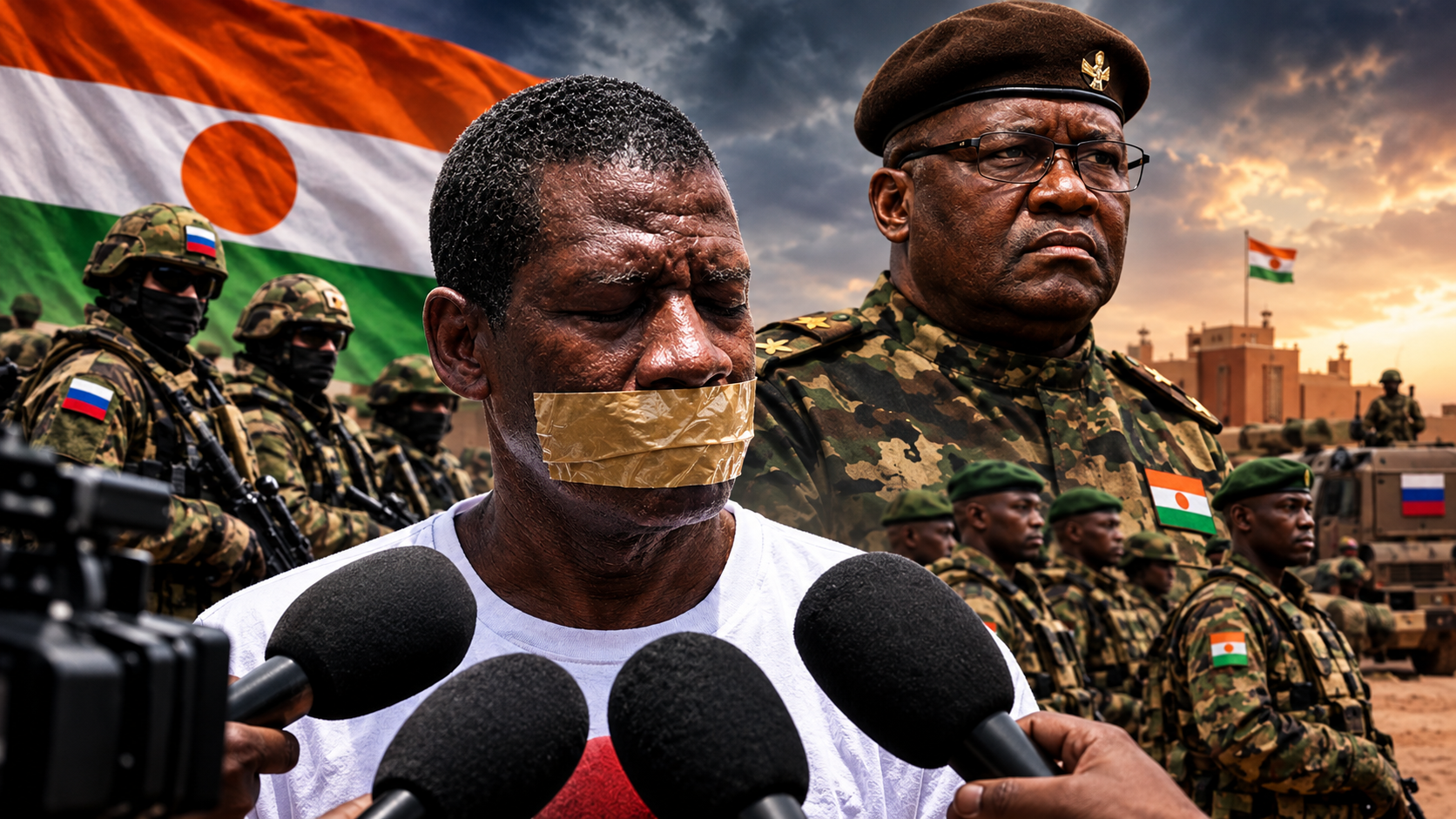
Another documented development is the growing role of Russia in Niger’s security apparatus. Africa Corps, a Russian force operating under the Russian Ministry of Defence, maintains a presence in the country and played a direct role during the August mutiny in Niamey. According to multiple sources, its elements provided support to forces loyal to the Tiani government. This shift has sparked debate over the priorities of Niger’s security strategy. Analysts suggest that Africa Corps is also involved in protecting the ruling power, in addition to participating in operations against armed groups. This does not mean that Russian forces are replacing the Nigerien army, but their presence has become a significant component of the country’s security architecture—ostensibly for the protection of Tiani rather than the entire population.
Nigerien soldiers continue to fall daily, victims of inadequate weaponry and equipment. New acquisitions made by Niamey are reportedly destined exclusively for Russian personnel tasked with guarding Tiani, rather than for the national army engaged in combat.
A case that transcends one journalist
The situation of Moussa Kaka must be understood within a wider context: persistent armed attacks, losses within Nigerien forces, internal military tensions, and the deepening security partnership with Russia. The core issue remains straightforward: Moussa Kaka is being held because he is believed to possess even more compromising revelations about the Tiani junta.
The official confirmation that he is alive is a crucial development. However, it does not dispel the shadows surrounding his disappearance. As long as the Nigerien authorities fail to provide more information about the reasons for and conditions of his detention, questions will persist.
In a country where the government claims to be restoring sovereignty, security, and transparency, the Moussa Kaka case serves as a concrete test: a measure of the authorities’ willingness to publicly explain the fate of a journalist who vanished for over a month.